Most business owners do not wake up one morning and decide they need a health and safety consultant. The realisation tends to creep in slowly, often after a tender is lost, an audit returns a long list of actions, or someone asks a question about your arrangements that you cannot quite answer. By the time the need becomes obvious, you are usually reacting under pressure rather than planning ahead.
It does not have to work that way. Health and safety consultancy is at its most valuable when it is brought in early, before a small gap turns into an expensive problem. The hardest part for most businesses across the UK is simply knowing when to hire a health and safety consultant in the first place. This article walks through five clear signs that the moment has arrived, along with what the right partner can do for your compliance, your audits, and the long-term health of your organisation.
Sign 1: No one can name your ‘competent person’
Under the Management of Health and Safety at Work Regulations 1999, every employer in Great Britain has a legal duty to appoint one or more ‘competent persons’ to help them meet their health and safety responsibilities. Competence here is a real standard, not a job title you hand to whoever is nearest. It means someone with the training, knowledge, and experience to recognise risks in your particular workplace and advise on how to control them.
If you cannot immediately say who your competent person is, that is worth paying attention to. It is just as telling if the name that springs to mind belongs to someone who has never had formal health and safety training, or who took on the role years ago and has not had the time or support to keep their knowledge current. Many growing businesses assume a director or office manager has it covered, only to discover that the role has quietly outgrown them.
This is one of the most common reasons businesses bring in support. A consultant can act as your external competent person directly, giving you a qualified point of contact whenever a question or issue arises. Alternatively, the right partner can train and mentor someone in your team so that the competence sits in-house, backed by expert advice when it is needed.
Sign 2: Your risk assessments are out of date
Risk assessments are the foundation of everything else. Done well, they are living documents that get reviewed whenever something changes, whether that is a new piece of equipment, a new process, a move to different premises, or the lessons learned after an incident. Done badly, they sit in a folder gathering dust and bear little resemblance to how work happens day to day.
A few familiar warning signs tend to show up together:
- Assessments downloaded from a generic template and never tailored to your actual activities.
- Documents completed once, often to satisfy a client or insurer, and then never revisited.
- Paperwork that exists on file but that the people doing the work have never seen or been briefed on.
The stakes are higher than a tidy filing system. Work-related ill health and injuries led to an estimated 40.1 million working days lost in 2024/25, and the HSE puts the annual cost of workplace injuries and new cases of ill health at around £22.9 billion. Behind those numbers are risks that were, in many cases, foreseeable. Bringing in a consultant gives your assessments a fresh, experienced pair of eyes and the sector knowledge to spot the gaps you have stopped noticing.
Sign 3: You are bidding for work that demands accreditation
In a growing number of sectors, you will not get through the door until you can prove your safety credentials. This is especially true in regulated and safety-critical industries such as nuclear, manufacturing, construction, and engineering, where clients expect their supply chain to meet a high standard before anyone sets foot on site.
In practice, that can mean ISO 45001 certification, membership of a recognised scheme such as SafeContractor, CHAS, or Constructionline, or working through a detailed pre-qualification questionnaire. If you are losing tenders on the health and safety section, or pulling evidence together in a panic the night before a submission is due, that is a clear signal you need support. It is a particularly live issue in areas like West Cumbria, where the supply chains around major nuclear and industrial sites hold their contractors to demanding requirements.
Consultancy support helps you build the systems, documentation, and management arrangements that win this kind of work and, just as importantly, help you keep it. Rather than scrambling to meet each new requirement as it lands, you end up with a framework that makes the next bid far easier.
Sign 4: You have had an incident, a near miss, or an HSE visit
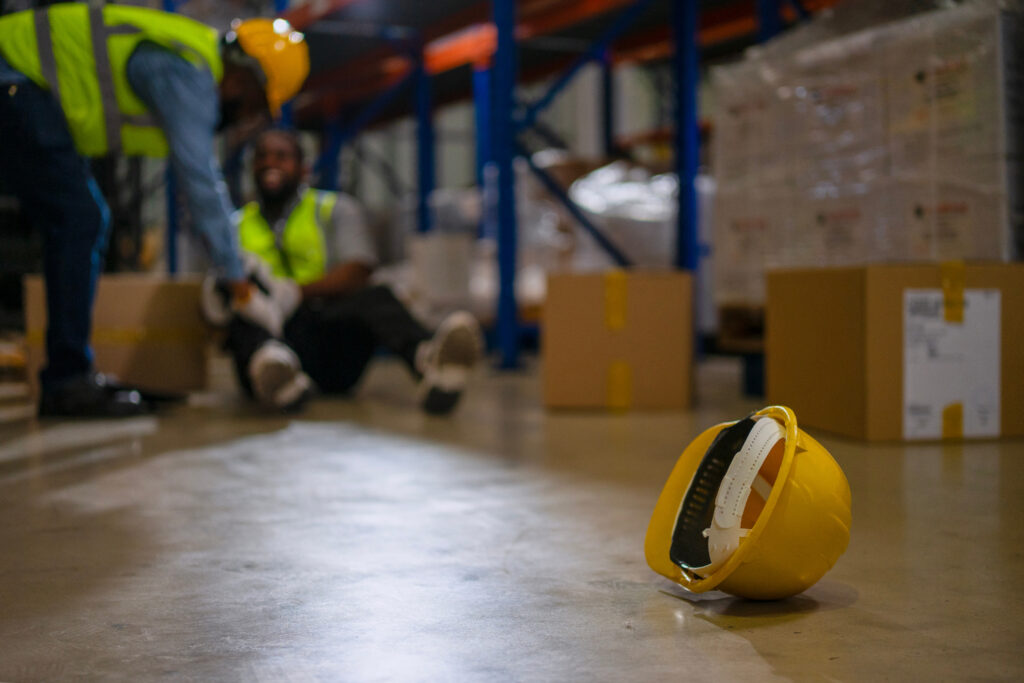
Some signals are impossible to ignore. A RIDDOR-reportable injury, an improvement or prohibition notice, or a serious near miss that could easily have been far worse all point to something in your system that needs attention. Even a routine HSE inspection can surface gaps you genuinely did not know were there.
The consequences of getting it wrong are real. In 2024/25 the HSE completed 246 prosecutions, with a 96% conviction rate, securing fines of more than £33 million. Those cases are reserved for the most serious failings, but the wider point matters for every business: the numbers represent real people who were harmed at work, and that is the outcome everyone wants to avoid.
The encouraging news is that an incident or a near miss does not have to define your business. A good consultant helps you investigate properly, understand the root cause rather than the surface symptom, close the gaps, and build a culture where the next incident is far less likely. This is the heart of moving from a reactive approach, where you fix things after they go wrong, to a proactive one that catches problems early.
Sign 5: Health and safety has become a side-of-desk job
In a lot of growing businesses, health and safety lands on whoever happens to have a little spare capacity. Often that is an office manager, an operations lead, or a director who is already juggling ten other priorities. For a while, it works perfectly well.
Then the business grows. The team gets bigger, new sites or activities are added, and the side-of-desk approach quietly stops keeping pace. Training lapses without anyone noticing, paperwork falls behind, and there is never quite enough time to step back and look at the whole picture rather than the next item on the list. None of this reflects badly on the person carrying it; it simply reflects a business that has outgrown an informal arrangement.
Bringing in consultancy support does not mean handing over responsibility and stepping away. It means giving that internal person a knowledgeable partner to lean on, freeing them to focus on the role they were hired for while the safety side gets the consistent attention it deserves. For many businesses, this is the point at which health and safety stops being a source of low-level worry and starts running smoothly in the background.
What health and safety consultancy support looks like in practice
If any of those signs feel familiar, it helps to know what working with a consultant involves day to day. The right partner adapts to your business rather than dropping a one-size-fits-all template on your desk, but most support tends to cover a similar set of areas:
- Audits and gap analysis to give you an honest, prioritised picture of where you stand against your legal duties.
- Risk assessments and method statements that are tailored to how your team really works.
- Policies and documentation that are practical and proportionate, rather than a folder no one reads.
- Training to build genuine competence across your team, from awareness sessions through to accredited courses.
- Help with accreditation such as ISO 45001 or contractor schemes, including support with tenders and pre-qualification.
- Ongoing, retained support so that advice is a phone call away whenever something changes or a question comes up.
The thread running through all of it is long-term improvement rather than a one-off fix. Compliance is the starting point, not the finish line. The real value comes from building a safer, better-run business that protects its people, wins better work, and spends less time firefighting.
Final thoughts
The common pattern across all five signs is that the need for support tends to reveal itself gradually. A single missed review, one stretched team member, or one awkward tender question is easy to wave away. It is when they start to stack up that the picture becomes clear.
None of these signs mean your business has failed at health and safety. More often, they mean it has grown to a point where expert input genuinely adds value, and recognising that early is the mark of a well-run organisation rather than a struggling one. Bringing in help is a sign of strength, not a confession of weakness.
If you read through this list and found yourself nodding at two or three of them, that is usually your answer. The businesses that handle health and safety best are not the ones that never have a gap. They are the ones that spot the gaps early and treat safety as something ongoing, supported, and built into how they work.
Want a Clear Picture of Where Your Business Stands?
If any of these signs struck a chord, a conversation is the easiest place to start. We work with businesses across Cumbria and the wider UK to take the pressure off health and safety, from a one-off audit through to fully retained support. Our health and safety consultancy services are built around your business and the sector you work in, with the goal of long-term improvement rather than a quick tick in a box.
Get in touch for a friendly, no-pressure chat about where you are now and where you would like to be.
Sources
- Health and Safety Executive, Annual statistics on work-related ill health and workplace injuries, 2024/25 (working days lost, cost to the economy, fatalities and non-fatal injuries): https://press.hse.gov.uk/2025/11/20/hse-publishes-annual-workplace-health-and-safety-statistics/
- Health and Safety Executive, Annual Report and Accounts 2024/25 (enforcement activity: prosecutions, conviction rate, and total fines).
- Management of Health and Safety at Work Regulations 1999, Regulation 7 (the duty to appoint competent persons): https://www.legislation.gov.uk/uksi/1999/3242/regulation/7/made