
Work-related ill health and injury cost British workplaces an estimated 40.1 million working days in 2024/25, with around 1.9 million people reporting an illness they believed was caused or made worse by their job. Behind those numbers sit real teams and real businesses, and the single biggest factor in turning them around is having people on site who genuinely understand how to keep others safe. That competence has to start somewhere, and for a great many safety professionals it starts with the IOSH Level 3 training course.
If you have come across the qualification and want to understand what it involves before committing your time or your team’s budget, this guide walks through the essentials: what the course is, who it is designed for, what you will study, how the assessment works, roughly how long it takes and the benefits it brings to both individuals and employers.
What is the IOSH Level 3 Certificate?
The full title is the IOSH Level 3 Certificate in Occupational Safety and Health Principles and Practice. It is awarded by IOSH, the Institution of Occupational Safety and Health, which is the Chartered professional body for health and safety practitioners and the largest organisation of its kind in the world. When a qualification carries the IOSH name, employers know it has been designed and quality-assured by the people who set the standards for the profession.
A couple of the terms are worth unpacking, because the sector does love an acronym. ‘OSH’ simply means occupational safety and health, the broad discipline of keeping people well and unharmed at work. ‘Level 3’ refers to where the qualification sits on the Regulated Qualifications Framework, the system Ofqual uses to compare qualifications across England. Level 3 is broadly equivalent to A-level standard, which gives you a sense of the depth involved without it being a university-level commitment.
In practical terms, the IOSH Level 3 qualification teaches you how to apply safety management systems and positively influence health and safety performance within an organisation. The syllabus was rebuilt to reflect how much workplaces have changed over the past decade, so the content feels current rather than something lifted from a dusty manual. It is a genuine qualification rather than a short awareness session, which is exactly why it carries weight on a CV and in a tender response.
It is also worth being clear about how this differs from the IOSH Managing Safely course, since the two are easy to confuse. Managing Safely is a shorter, practical programme that helps managers and supervisors handle their day-to-day safety responsibilities. The Level 3 Certificate goes considerably broader and deeper, and it is built for people who want to make health and safety a recognised part of their career rather than one duty among many.
Who is the IOSH Level 3 training course for?
The qualification is aimed at new and aspiring occupational safety and health professionals across any sector. If you are at the start of a safety career and want a solid, recognised foundation to build on, this is one of the clearest routes in. It assumes you are beginning your journey, so you do not need a stack of prior safety qualifications to get started.
It is equally well suited to people who already carry some responsibility for safety and want to put proper knowledge behind it. That includes supervisors, team leaders, managers and anyone preparing to step up into a role where keeping colleagues safe is part of the brief. Plenty of learners come to the course because their job has quietly grown to include safety duties, and they want the confidence that comes from understanding the why as well as the what.
Here on the West Coast of Cumbria, this matters more than most places. The region is home to nuclear, manufacturing and engineering employers operating in genuinely safety-critical environments, where a strong safety culture is not a nice-to-have but a condition of doing business. For organisations like these, developing in-house safety capability through a respected qualification is one of the most sensible investments they can make.
What does the IOSH Level 3 syllabus cover?
The course is made up of four units, each building on the last to give you a rounded understanding of how safety works in the real world. Rather than abstract theory, the focus throughout is on knowledge you can apply the moment you are back at your desk or out on site.
The four units are:
- Fundamentals of occupational safety and health principles and management systems. This sets the foundations, covering why safety matters, the responsibilities organisations carry and how a structured management system holds it all together.
- Principles and application of occupational safety and health risk management. Here you learn how to spot hazards, assess risk properly and apply the right controls, which is the bread and butter of effective safety work.
- Principles and application of occupational safety and health incident management. This unit deals with what happens when things go wrong, from investigating incidents to learning the lessons that stop them happening again.
- Improving occupational safety and health performance and culture. The final unit lifts your view to the bigger picture: how to measure performance, influence behaviour and build the kind of culture where safety becomes second nature.
Taken together, the four units mirror the rhythm of a safety role, which is why the qualification translates so readily into day-to-day practice.
How is the IOSH Level 3 course assessed?
There are two assessments, and you need to pass both to achieve the qualification. The good news is that they are designed to test understanding you can genuinely use, not your ability to memorise a textbook the night before.
The first is a multiple-choice knowledge exam. It consists of 80 questions, you are given two hours to complete it and the pass mark is 70 per cent. This checks that the core principles have landed.
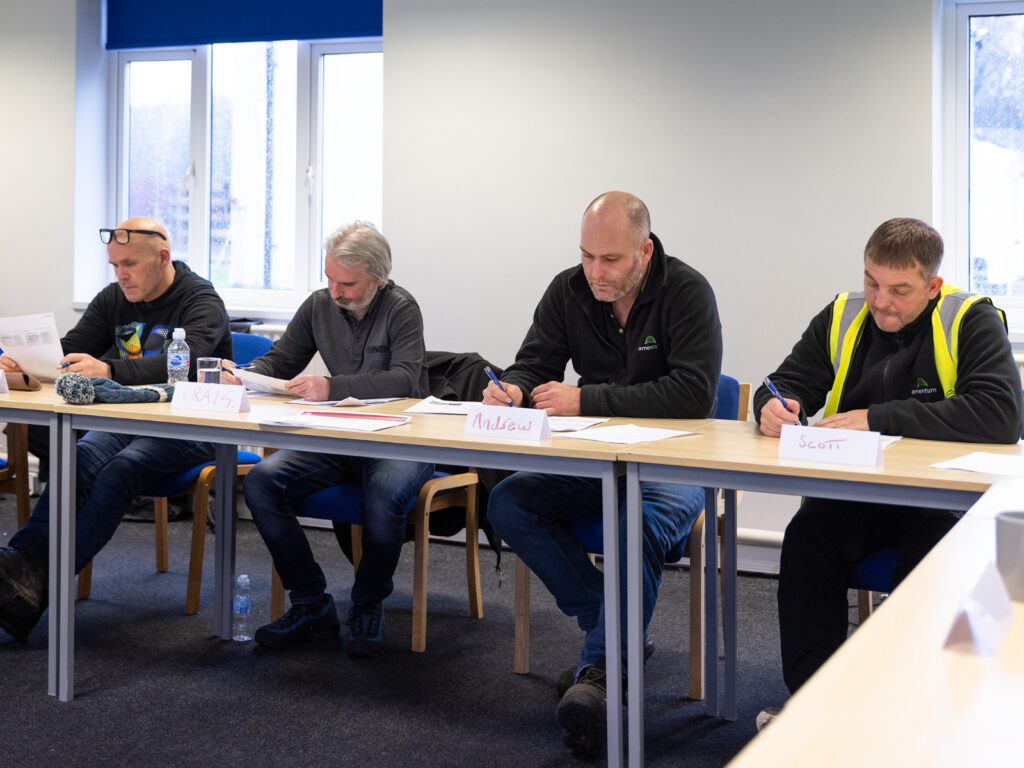
The second is a scenario-based assessment, which is where the practical side really shows. Over a two-hour assessment you work through four tasks that reflect the everyday work of a safety professional: carrying out a workplace inspection, completing a risk assessment, investigating an incident and preparing for a toolbox talk. The pass mark for this assessment is 50 per cent.
Both the exam and the scenario-based assessment are taken online and are remotely invigilated, which means you can sit them under proper exam conditions from home, your workplace or wherever suits, as long as you have a stable internet connection. You will need a laptop with a built-in camera, microphone and speakers, plus a smartphone, and you are observed and recorded throughout to keep everything secure and above board.
How long does the course take, and how is it delivered?
This is the question we are asked most often, and the honest answer is that it depends on how you study. The IOSH Level 3 Certificate is a more substantial qualification than a one-day awareness course, so the learning is typically spread across a number of sessions rather than crammed into a single sitting, with the exam and assessment scheduled once the teaching is complete.
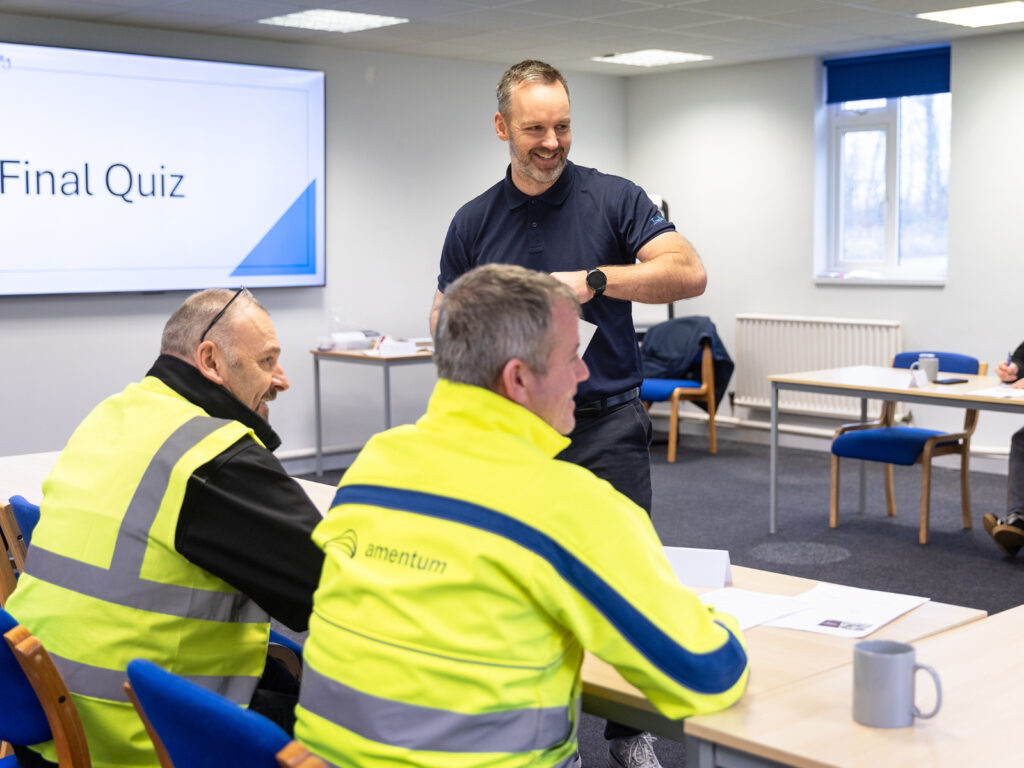
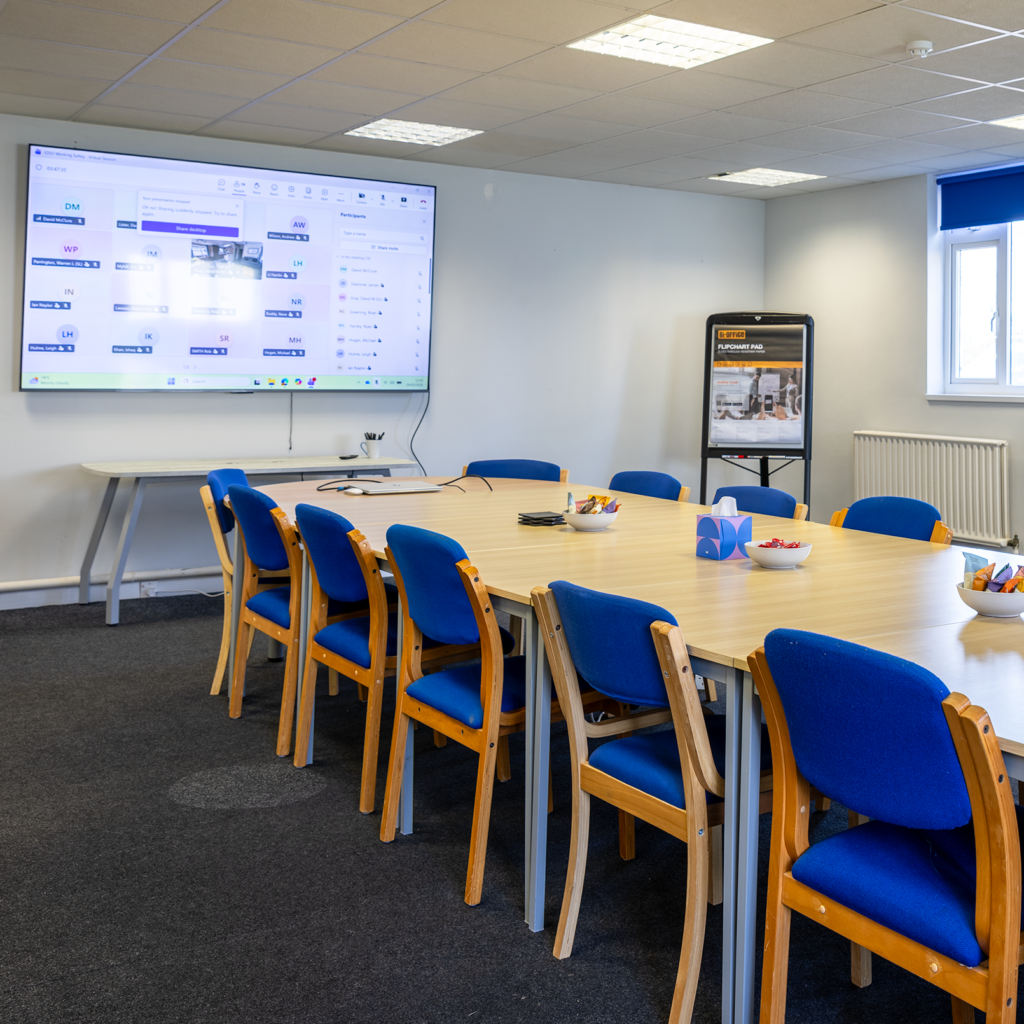
At Inspire Safety we deliver the qualification through face-to-face training, either at our training centre in the North West or as an in-house programme at your own premises. Learning in the room with an experienced tutor tends to suit this kind of content well, because so much of it comes alive through discussion, real examples and the chance to ask questions as they occur to you. In-house delivery also lets us weave in the specific risks and scenarios your team deals with every day.
Because exact dates and the precise format can vary, the simplest way to get current timings is to look at our IOSH Level 3 Certificate course page or to get in touch and we will talk you through the options for you or your team.
The benefits of an IOSH Level 3 qualification
For an individual, the appeal is straightforward. You come away with a nationally recognised, regulated qualification that demonstrates real competence rather than a passing familiarity with safety. It is also a recognised stepping stone within the profession, because successful completion meets the academic requirements for Technical Membership of IOSH, known as TechIOSH, which is a meaningful credential in its own right and a marker that you are serious about the field.
Learners themselves rate it highly. In an IOSH post-assessment survey from late 2025, 92 per cent of learners said they would recommend the qualification to colleagues and other safety professionals, and 83 per cent reported that it gave them the knowledge and skills they need for their future as OSH professionals. Those are the kind of numbers that tell you the course delivers on its promise.
The benefits for employers are just as tangible. When you have people on site who understand risk properly, you tend to see fewer incidents, less disruption and a stronger safety culture, all of which protect both your people and your bottom line. Given the scale of the figures the Health and Safety Executive reports each year, investing in competence is far cheaper than dealing with the consequences of the alternative. A well-trained safety champion is one of the best returns a business can find.
Studying your IOSH Level 3 in Cumbria and across the UK
The IOSH Level 3 Certificate is one part of a broader picture. Alongside it we offer a range of health and safety training courses spanning IOSH and first aid, as well as practical health and safety consultancy for organisations that want hands-on support embedding safety into how they work. Whether you are an individual mapping out a career or an employer building capability across a workforce, there is usually a sensible route forward.
Finding quality, in-person health and safety training within reach can be a challenge if you are based in Cumbria or the wider North West, which is exactly the gap we set out to fill. As a UK health and safety consultancy delivering the IOSH Level 3 Certificate through face-to-face training, we offer it both at our North West training centre and as in-house programmes at client workplaces across England, so distance does not have to get in the way of developing your team.
Final thoughts
The IOSH Level 3 Certificate occupies a genuinely useful spot in the health and safety landscape. It is rigorous enough to mean something to employers, broad enough to give you a rounded understanding of the discipline and accessible enough to suit someone taking their first proper step into a safety role.
For individuals, it is a recognised qualification and a clear route towards professional membership. For employers, particularly those in the regulated and safety-critical industries that define so much of Cumbria’s economy, it is a practical way to build the in-house competence that keeps people safe and operations running smoothly.
If you have been weighing up whether the course is right for you or your team, the best next step is simply to find out how it would work in practice, including timings, delivery and cost.
Ready to Start Your IOSH Level 3 Training?
If you would like to know more about studying the IOSH Level 3 Certificate, we are here to help. Take a look at our IOSH Level 3 Certificate course page for the latest details, or get in touch for a friendly, no-pressure chat about the right option for you or your team. We will happily talk you through dates, delivery and anything else you need to feel confident about the decision.
Sources
- Health and Safety Executive (HSE), Annual workplace health and safety statistics 2024/25, published 20 November 2025: https://press.hse.gov.uk/2025/11/20/hse-publishes-annual-workplace-health-and-safety-statistics/
- Institution of Occupational Safety and Health (IOSH), IOSH Level 3 Certificate in Occupational Safety and Health Principles and Practice: https://iosh.com/qualifications-and-courses/qualifications/iosh-certificate